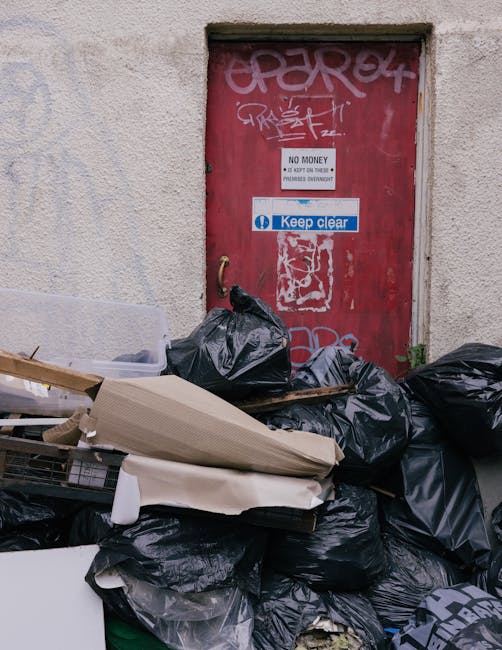
SE18 Bulky Rubbish Collection Guide Including Skip Alternatives
If you are staring at an old sofa, a broken wardrobe, half a garage full of junk, or a pile of renovation offcuts in SE18, the job can feel bigger than it first looked. That is exactly why this SE18 bulky rubbish collection guide including skip alternatives matters. It walks you through the practical options, explains when a skip is useful, and shows where faster, cleaner alternatives often make more sense.
Truth be told, bulky waste is one of those jobs people put off until the hallway is narrower than it should be and the trip hazard starts bothering everyone. The good news? You do not need to guess your way through it. This guide covers what bulky rubbish collection usually involves, how it works in real life, which items need extra care, and how to choose between a skip and a more flexible clearance service.
For a broader look at disposal services, you may also find the site's waste removal overview helpful, especially if your load includes mixed household items rather than just one bulky item.
Quick takeaway: If your waste is awkward, heavy, mixed, or needs loading from inside the property, skip alternatives can save time, space, and a lot of hassle. If you have a large, static pile of inert material, a skip may still be the simplest route.
Table of Contents
- Why SE18 bulky rubbish collection guide including skip alternatives Matters
- How SE18 bulky rubbish collection guide including skip alternatives Works
- Key Benefits and Practical Advantages
- Who This Is For and When It Makes Sense
- Step-by-Step Guidance
- Expert Tips for Better Results
- Common Mistakes to Avoid
- Tools, Resources and Recommendations
- Law, Compliance, Standards, or Best Practice
- Options, Methods, or Comparison Table
- Case Study or Real-World Example
- Practical Checklist
- Conclusion
- Frequently Asked Questions
Why SE18 bulky rubbish collection guide including skip alternatives Matters
Bulky rubbish is not just "a few big things." In SE18 homes, flats, terraces, and business premises, it often includes a mix of furniture, appliances, broken fittings, garden waste, loft clear-outs, and builder leftovers. That mix is where people get stuck. One item is easy. Seven different item types, a narrow stairwell, and no driveway? Different story entirely.
SE18 includes plenty of properties where access can be awkward: shared entrances, limited front space, parking restrictions, and the usual London challenge of simply finding somewhere to put a skip without annoying half the street. A bulky collection guide helps you avoid over-ordering the wrong solution, paying for unused capacity, or ending up with waste you cannot legally leave where it is.
It also matters because bulky rubbish is often emotionally loaded. A house clearance after a move, a flat clear-out after tenants leave, or a garage full of inherited clutter can feel draining before the lifting even starts. A straightforward plan reduces the stress. You know what stays, what goes, and who is doing the heavy lifting.
If you need a more specific room-by-room or property-type approach, pages like home clearance, house clearance, and flat clearance can be useful next steps because bulky waste rarely lives in just one place.
How SE18 bulky rubbish collection guide including skip alternatives Works
At a practical level, bulky rubbish collection means identifying what needs to go, choosing the right removal method, and arranging collection so the items are lifted, loaded, transported, and disposed of responsibly. Simple enough on paper. In reality, the best method depends on the type of waste, access, timing, and whether the load is made up of just one material or a mixed pile.
What usually happens in a collection
- You list the items, or send photos so the load can be assessed.
- The collection method is chosen: skip, man and van, same-day clearance, or a specialist service for certain items.
- The waste is separated if needed, especially where recyclable and non-recyclable items are mixed.
- Items are removed from the property or external space.
- The waste is taken to the appropriate disposal or recycling route.
This is where skip alternatives often come into their own. A skip is static, which is fine if your rubbish is already outside and you are doing ongoing work. But if the waste is upstairs, buried in a loft, spread across a garage, or mixed with furniture and appliances, a manual collection can be much easier.
For example, a one-bed flat in SE18 with an old mattress, two wardrobes, and some bagged clutter might be a poor fit for a skip but ideal for a targeted clearance. On the other hand, a builder's pile of rubble and timber at ground level may still be well suited to a skip. Not every job needs the same tool. Common sense, really.
For building waste specifically, the builders waste clearance service page is worth comparing with what can go in a skip if your load is mainly renovation debris.
Key Benefits and Practical Advantages
The right bulky waste solution should do more than simply remove clutter. It should make the whole process easier, safer, and less disruptive. That is especially important in SE18 where space is often at a premium.
- Less lifting for you: A collection service can remove items from inside the property, which is a big plus if the waste is on upper floors or in a tight hallway.
- Better use of space: No skip sitting on a road or taking up a parking bay unless you truly need one.
- Faster turnarounds: Bulky items can often be removed sooner than arranging permits and delivery logistics for a skip.
- More flexible for mixed waste: Furniture, appliances, and general junk can often be handled together, subject to acceptance rules.
- Cleaner presentation: Useful if you are clearing a property for sale, letting, refurbishment, or end-of-tenancy handover.
A less obvious benefit is control. You are not paying for a fixed box and then trying to make it fit your waste. Instead, you can match the service to the actual job. That sounds small, but it often saves a surprising amount of friction.
For furniture-heavy jobs, furniture disposal and furniture clearance can be more practical than trying to cram bulky items into a skip by hand. Same goes for a single awkward item like a fridge or mattress, where a specialist collection is usually cleaner and safer.
Who This Is For and When It Makes Sense
This guide is useful if you are a homeowner, tenant, landlord, letting agent, tradesperson, or business owner in SE18. In practice, bulky rubbish builds up in a few common situations:
- moving home and discovering you do not want half the furniture anymore
- clearing out a loft, garage, shed, or spare room
- renovating and ending up with old fixtures, packaging, and broken fittings
- dealing with end-of-tenancy clutter
- replacing sofas, beds, wardrobes, or appliances
- emptying a commercial unit or office space
It also makes sense when you need a quick result. If the place looks chaotic and you need to reclaim usable space before the weekend, waiting around for a skip delivery window can feel, well, slightly annoying. A direct collection can be the more practical choice.
For offices and commercial properties, bulky waste often overlaps with confidential or equipment-related disposal. In those cases, look at office clearance and, where paperwork is involved, confidential shredding. If you are dealing with stock, fixtures, or mixed trade waste, business waste removal may fit better than a general household solution.
Step-by-Step Guidance
Here is a simple way to handle bulky rubbish in SE18 without making the job harder than it needs to be.
1. Sort the waste into sensible groups
Separate furniture, appliances, garden waste, builder's waste, metal items, and general junk if you can. You do not need museum-level organisation here. Just enough order to avoid confusion when the collection is planned.
2. Check for anything specialist
Some items need extra care. Fridges, freezers, sofas, mattresses, and anything hazardous should not be treated as ordinary rubbish. If you mix them in without warning, the collection may be delayed or the item may be refused.
3. Measure access honestly
This is a big one. Can a vehicle get close enough? Are there stairs, narrow doors, or no lift? Is there space to stage waste safely? Answering those questions upfront prevents the classic "it looked easier in the photo" moment.
4. Decide whether a skip really suits the job
Ask yourself: is the waste already outside, is it mostly heavy inert material, and will the load build gradually over several days? If yes, a skip might be useful. If no, a collection service may be the better fit.
5. Get a clear quote or collection plan
Share the item list, photos, access notes, and any relevant restrictions. Clear information normally leads to a smoother service and fewer surprises on the day. That is true for most removal jobs, to be fair.
6. Prepare the area before collection
Move personal items away from the waste, open access routes, and keep pets or children out of the way. If the collection is inside a home, a quick tidy of pathways can save time and reduce trip hazards.
7. Confirm the disposal route
Good providers should be able to explain how items are handled, including recycling and separation where appropriate. If you care about responsible disposal, this is worth asking about rather than assuming.
Expert Tips for Better Results
A few practical habits can make a bulky collection noticeably smoother.
- Take photos in daylight. Morning or early afternoon photos usually show item condition and volume more clearly. The flash can make everything look smaller than it is, which helps nobody.
- Break down what you safely can. Flat-pack furniture, disassembled shelving, and empty boxes take less space and are quicker to remove.
- Keep reusable items separate. If a chair, table, or appliance still works, consider whether it should go with reuse-ready items instead of the waste pile.
- Check for hidden contents. Wardrobes, drawers, and cupboards have a habit of hiding books, cables, batteries, and odd little bits you forgot about.
- Think about timing. If parking is tight or the street is busy, early-day collections are often less stressful.
One small but useful habit: stand in the room and look at the waste from the doorway. If you can describe it clearly in one breath, great. If not, split it into zones. That tiny bit of thinking upfront saves a lot of back-and-forth later.
If your load includes old white goods, the dedicated fridge and appliance removal page is worth a look, and bulky bedroom items are often better handled through mattress and sofa disposal. Those items are awkward, and they deserve their own plan.
Common Mistakes to Avoid
Most problems with bulky rubbish collection are avoidable. The same few mistakes come up again and again.
- Choosing a skip without checking access. A skip can be brilliant, but not if there is nowhere legal or practical to place it.
- Assuming all bulky items are treated the same. They are not. Sofas, mattresses, appliances, rubble, and garden waste often need different handling.
- Underestimating volume. A single bulky item can quickly turn into a full van once you start adding bags, offcuts, and loose bits from the corner of the room.
- Forgetting about restricted items. Hazardous materials, electricals, and some appliances need extra attention.
- Leaving the sort-out until collection day. That is how delays happen.
Another mistake is focusing only on price and ignoring convenience. The cheapest option on paper is not always the best if it creates more labour, more time, or more disruption. Let's face it, nobody wants to spend Saturday morning wrestling a sofa down three flights of stairs.
Tools, Resources and Recommendations
You do not need fancy equipment for most bulky rubbish jobs, but a few basics help a lot.
- Measuring tape: Useful for checking whether items can pass through doors and stairwells.
- Phone camera: Clear photos make quotes and planning easier.
- Marker or labels: Handy if you are separating keep, donate, recycle, and remove piles.
- Heavy-duty gloves: Important for broken wood, sharp edges, or dusty loft clutter.
- Sturdy bags or boxes: Good for smaller loose items that would otherwise roll about.
For larger clear-outs, the most useful "resource" is often a service page that matches the actual job. That may be garage clearance for stored clutter, loft clearance for hard-to-reach items, or garden clearance if the bulky waste is outdoors and mixed with cuttings, old planters, or broken outdoor furniture.
If you want to understand disposal habits in a more environmentally aware way, the site's recycling and sustainability information is a useful companion piece. It helps set expectations about what can be reused, recycled, or separated before disposal.
Law, Compliance, Standards, or Best Practice
Bulky waste in the UK should be handled carefully and responsibly. You do not need to become an expert in waste law to book a collection, but it helps to know the basic expectations.
In plain English, the key point is this: your waste should go to a legitimate disposal route, and anyone collecting it should be able to manage it properly. That matters for household waste, commercial waste, and anything that may contain hazardous components. It also matters if you are a landlord, business owner, or managing agent with a duty to keep premises safe and tidy.
If a job involves potentially hazardous items, ask about separate handling rather than forcing them into a general load. The same goes for heavy electrical items, appliances with refrigerants, or anything contaminated. A reputable operator should treat those items cautiously and explain any limits clearly.
Best practice also includes insurance, safe lifting, and clear communication. If a team is working inside a property, you want sensible procedures, not improvisation. That is why pages such as insurance and safety and health and safety policy can be reassuring before you book. They signal that the provider takes risk seriously, which matters more than most people realise.
Where business waste or mixed commercial items are involved, make sure the chosen service is appropriate for the material type. Not everything should be lumped together just because it fits in a van. The tidy answer is not always the safe answer.
Options, Methods, or Comparison Table
Here is a straightforward comparison of common bulky rubbish disposal options in SE18. The right choice depends on access, volume, item type, and how quickly you want the space back.
| Option | Best for | Advantages | Watch-outs |
|---|---|---|---|
| Skip | Large static loads, especially heavy builder's waste | Good for ongoing work; lets you add waste over time | Needs space, may need a permit, and you still do the lifting |
| Bulky rubbish collection | Mixed household items, furniture, appliances, general clutter | Quick, flexible, usually less disruptive | May not suit very heavy inert waste in large volumes |
| Room or property clearance | Lofts, garages, flats, full homes, office spaces | Highly practical for access issues and mixed waste | Can be more involved if you only have one small item |
| Specialist item disposal | Fridges, mattresses, sofas, hazardous items | Safer and more compliant for awkward items | Not all items can go together in one standard load |
In real life, the answer is often a blend. A garage clear-out may begin with general bulky rubbish collection and finish with a separate arrangement for appliances or garden waste. That is normal. It does not have to be neat to be effective.
If you are still weighing up whether a skip would be overkill, a little note on skip contents can help. The page about what can go in a skip is useful because many people discover their pile contains a lot more mixed material than they first assumed.
Case Study or Real-World Example
A fairly typical SE18 scenario goes like this: a couple moves out of a two-bedroom flat and realises the old sofa will not fit the new place, the spare mattress has seen better days, and the storage cupboard has quietly become a graveyard of broken lamp stands, cardboard, and a wonky shelving unit.
At first glance, a skip seems like the obvious answer. But then the details appear. The flat is on the first floor. The street has tight parking. There is no easy place to keep a skip. The load is a mix of furniture, soft items, and a few bagged odds and ends. Suddenly, the skip looks less obvious and a lot more fiddly.
A targeted bulky collection is usually the better fit in that situation. The items are removed in one visit, the hallway is cleared without prolonged disruption, and the residents do not have to manage loading heavy items themselves. The result is less noise, less lifting, and less standing around wondering whether the van can fit past the parked cars. Small victory, but a real one.
For a different example, think of a ground-floor renovation where rubble, timber, and plasterboard are already stacked neatly outside. There, a skip may be entirely sensible. The point is not that skips are bad. Far from it. The point is that the best method changes depending on the job.
Practical Checklist
Use this simple checklist before arranging bulky rubbish collection in SE18:
- List every bulky item clearly.
- Separate ordinary rubbish from specialist items.
- Take photos in good light.
- Measure doors, stairs, and access routes.
- Check whether anything is hazardous, electrical, or unusually heavy.
- Decide whether a skip, clearance, or specialist removal is the better fit.
- Clear the route to the waste.
- Move anything you want to keep well away from the collection area.
- Ask about recycling or reuse where relevant.
- Confirm the collection time and any access notes.
Expert summary: The simplest bulky rubbish collection is the one planned around access, item type, and disposal route from the start. A skip is one option, not the default answer for every SE18 property.
Conclusion
SE18 bulky rubbish collection does not need to be complicated. Once you separate the waste into sensible groups, check access honestly, and choose the method that suits the actual job, the rest gets much easier. For mixed household clutter, awkward furniture, or items buried inside a property, skip alternatives often offer the cleanest and least stressful solution. For heavy static waste and building debris, a skip may still be the better call.
The real win is choosing the right approach before you start lifting things. That is what saves time, protects the property, and keeps the whole process calmer than it first felt. And honestly, a calm clear-out is worth a lot.
If you are planning a clear-out now, the next step is simple: compare your waste type, access, and timing, then choose the removal option that gives you the least hassle and the best outcome.
Get a free quote today and see how much you can save.
Frequently Asked Questions
What counts as bulky rubbish in SE18?
Bulky rubbish usually means large household or commercial items that are awkward to carry or dispose of in normal bins. That can include sofas, mattresses, wardrobes, appliances, garden furniture, and similar items.
Is a skip always the best option for bulky rubbish?
No. A skip is useful for large, static loads, especially builder's waste, but skip alternatives are often better for mixed items, upstairs collections, or properties with limited access.
What skip alternatives are commonly used?
Common alternatives include manual bulky rubbish collection, room-by-room clearance, furniture disposal, appliance removal, and full property clearance services.
Can I mix furniture and general rubbish in one collection?
Often yes, but it depends on the provider and the type of waste. Mixed loads are common, although specialist items may need separate handling.
Do I need to be home during collection?
Sometimes yes, especially if the items are inside the property or access needs to be arranged. For external waste, it may be possible to plan the job with clear instructions in advance.
How do I know whether I need clearance or a skip?
Ask yourself where the waste is, what type it is, and how much space it takes. If it is already outside and mostly inert material, a skip may work. If it is mixed, bulky, or inside the property, clearance is often easier.
Are fridges and mattresses treated differently?
Yes, they usually are. Fridges, mattresses, and sofas often need specialist handling or separate routes, which is why dedicated item disposal pages are useful.
What should I do before the collection team arrives?
Clear access paths, separate items you want to keep, and make sure any special items are identified clearly. A few minutes of prep can make a big difference.
Can bulky waste be recycled?
Some of it can. It depends on the material and condition of the item. Furniture, metal, and certain appliances may be sorted for reuse or recycling where possible.
What if my rubbish is in a loft or garage?
That is very common. Loft clearance and garage clearance services are often better than a skip because the waste has to be removed from a difficult space first, not just collected from the kerb.
Is bulky rubbish collection suitable for landlords and letting agents?
Yes. It is often a practical choice for end-of-tenancy clear-outs, abandoned furniture, and properties that need to be turned around quickly.
How can I make the process less stressful?
Sort early, photograph the load, be honest about access, and choose the removal method that fits the property rather than forcing the property to fit the waste. Simple, but it works.
Where can I check pricing and booking details?
The most useful place to start is the site's pricing and quotes page, and if you are ready to move ahead, you can also use book online.
Can I ask about company policies before I book?
Absolutely. It is sensible to review pages such as about us, insurance and safety, and recycling and sustainability if trust and process matter to you.